Leave Your Message

China Top NVR Camera Manufacturers for Global Buyers?

Choosing the right China-based NVR Camera manufacturer requires more than comparing catalog prices. Global buyers need evidence of engineering depth, production consistency, and dependable after-sales support. A polished website is not enough. The real test appears in firmware updates, night footage, network stability, and replacement handling.

John Honovich, founder of IPVM and a respected video surveillance analyst, has stated, “Video surveillance is a system, not a single product.” This principle guides the evaluation in this article. A capable manufacturer should coordinate cameras, NVRs, PoE switches, storage, mobile applications, and cybersecurity controls. It should also explain sensor performance clearly, rather than hiding behind impressive resolution numbers. Small details matter. For example, a buyer should check whether recorded faces remain identifiable after compression and whether remote playback works during weak network conditions.

This overview examines leading Chinese manufacturers through practical criteria. These include product experience, OEM and ODM capability, testing procedures, international certifications, software support, and supply-chain reliability. It also considers regional service capacity and communication during technical disputes. Some companies may offer excellent hardware but limited firmware transparency. Others may provide strong platforms but weaker customization. That weakness matters.

No shortlist is perfect. Market rankings change. Factory claims require verification through samples, audits, reference projects, and long-term testing. Buyers should request raw video files, warranty terms, update policies, and clear storage calculations before signing contracts. The goal is not merely to find a low-cost supplier. It is to identify a trustworthy partner that can keep an NVR Camera system stable after installation, across different countries, climates, and operating conditions.
China Top NVR Camera Manufacturers for Global Buyers?

What Is an NVR Camera System?

What Is an NVR Camera System?

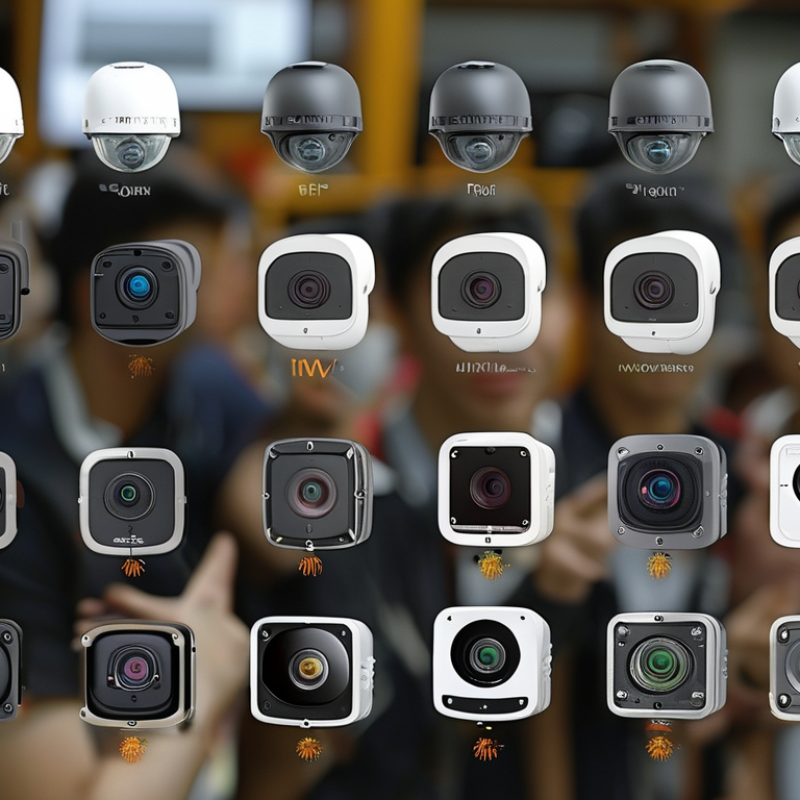
An NVR camera system records video from network-connected IP cameras. Unlike a DVR, it processes digital streams through an Ethernet network. A typical setup includes cameras, an NVR, storage drives, a network switch, and a monitor or mobile interface. Power over Ethernet can carry electricity and video through one cable, reducing installation work.

The NVR receives each camera stream, compresses it, and stores footage according to selected settings. Resolution, frame rate, codec, and retention days directly affect storage demand. For example, four 4-megapixel cameras recording continuously can require several terabytes monthly. Network capacity matters too. A strong camera can still produce unstable footage if the switch or cabling is undersized.

Market evidence supports this system’s growing role. Grand View Research valued the global video surveillance market at approximately USD 53.7 billion in 2023, with projected growth through 2030. MarketsandMarkets also identifies network-based recording and analytics as major industry drivers. However, market forecasts are not installation guarantees. A specification sheet can mislead. Buyers should test night images, motion detection, remote playback, and recovery after power loss. Blind spots remain possible. Careful site surveys often matter more than headline resolution.

How China’s NVR Manufacturers Serve Global Markets

How China’s NVR Manufacturers Serve Global Markets

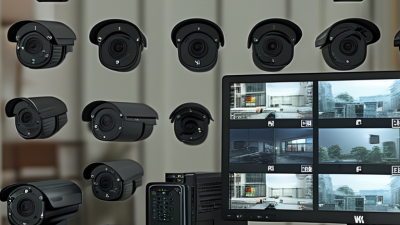
China’s NVR manufacturers serve overseas buyers through flexible production, technical customization, and export-oriented support. A practical supplier usually begins with the buyer’s camera count, storage period, network design, and target market. These details affect processor selection, hard-drive capacity, PoE allocation, and enclosure design.

Many factories support common video protocols, multilingual interfaces, H.265 compression, remote access, and mobile monitoring. They may also adjust firmware for regional requirements and integrate private-label packaging. Before mass production, experienced buyers should request samples, inspect menus, test playback, and confirm compatibility with existing cameras. Small tests reveal expensive problems.

Quality control often includes incoming component checks, assembly inspections, firmware verification, and burn-in testing. Export teams may provide documents related to applicable safety, electromagnetic, and environmental requirements. However, certificates alone do not prove consistent performance. A weak supplier can still deliver unstable firmware or poor technical support. That assumption fails often.

Reliable manufacturers usually share test procedures, warranty terms, spare-parts policies, and update schedules before signing an order. They also help buyers manage shipping documents and communication across time zones. Yet support quality varies between factories. Some respond quickly during sales but slowly after delivery. Buyers should test after-sales service with specific technical questions before cooperation. A factory visit, independent inspection, or staged payment may reduce uncertainty, although none removes every risk.

China Top NVR Camera Manufacturers for Global Buyers? - How China’s NVR Manufacturers Serve Global Markets

Typical product capabilities and international service dimensions commonly offered by China-based NVR manufacturers

Evaluation Dimension Typical Market Offering Relevance for Global Buyers Key Verification Points
Video Input Capacity Common product ranges include 4, 8, 16, 32, 64 and higher network-camera channels. Supports residential systems, retail locations, warehouses, office buildings and multi-site installations. Confirm the number of supported channels, camera registration method and maximum incoming bandwidth.
Recording Resolution Many current NVR product lines support network cameras from standard high-definition formats through 4K and higher-resolution streams. Allows buyers to match image detail with storage capacity, network bandwidth and monitoring requirements. Check maximum recording resolution per channel, frame rate and whether full-resolution recording is supported on all channels simultaneously.
Video Compression Products commonly support modern compression formats designed to reduce storage and transmission requirements, together with compatibility options for older cameras. Lower bitrate requirements can reduce hard-drive capacity and network costs in large deployments. Verify supported compression formats, bitrate controls, codec licensing requirements and compatibility with existing cameras.
Storage Architecture Typical systems provide one or more internal drive bays, scheduled recording, event recording, overwrite functions and external backup options. Enables retention periods to be configured for security, retail, logistics and industrial applications. Calculate storage using camera count, resolution, frame rate, bitrate, recording hours and required retention days.
Network Connectivity Common interfaces include wired Ethernet ports, network uplinks and, on selected models, integrated power delivery for compatible cameras. Supports centralized installation and simplifies deployment where cameras and recorders share a structured network. Check port speed, power budget, uplink capacity, network topology and compatibility with local infrastructure.
Interoperability Export-oriented manufacturers commonly provide support for widely used network-video communication methods and third-party camera integration. Reduces vendor lock-in and helps buyers combine cameras, recorders, monitors and management software from different sources. Request an interoperability list, test third-party cameras and confirm which functions remain available after integration.
Remote Management Typical features include browser access, desktop software, mobile applications, multi-site viewing, playback and alarm notifications. Enables overseas operators, installers and security teams to manage systems without being physically present. Review supported operating systems, mobile availability, cloud dependency, user permissions and remote-update procedures.
Artificial Intelligence Functions Selected product families offer functions such as motion filtering, human or vehicle classification, perimeter alerts and face-related analytics. Can reduce false alarms and improve search efficiency in commercial and industrial environments. Confirm whether analytics are processed by the camera, recorder or server, and check regional privacy requirements before deployment.
Cybersecurity Controls More mature product lines commonly include account permissions, encrypted access options, audit records, password policies and firmware maintenance. Helps protect surveillance systems connected to corporate or public networks. Ask for vulnerability-response procedures, update policies, secure-default settings and network-segmentation guidance.
Electrical Compatibility Export models are often designed for international power systems and may support broad input-voltage ranges, subject to the specific model. Improves suitability for buyers operating across different national electrical environments. Verify input voltage, frequency, plug type, power-supply certifications and surge-protection requirements for the destination country.
Environmental Design Recorders are generally intended for controlled indoor locations, while outdoor environmental protection is normally provided by the camera enclosure. Helps buyers select appropriate equipment for control rooms, retail sites, warehouses and remote cabinets. Check operating temperature, humidity limits, ventilation requirements, fan design and installation orientation.
Compliance Documentation Manufacturers serving international markets commonly prepare regional conformity documents and product safety information for applicable destinations. Supports customs clearance, project approval and procurement compliance. Request certificates, declarations, test reports, product labels and documentation matching the exact model and destination market.
Customization Capability Factory programs may include firmware language options, packaging changes, user-interface adjustments, private-label production and hardware configuration. Useful for distributors, system integrators and projects requiring localized products. Confirm minimum order quantity, engineering charges, sample approval, software ownership and long-term component availability.
Export Packaging International shipments commonly use protective internal molding, moisture protection, carton labeling and palletized packing for larger orders. Reduces transportation damage and simplifies warehouse handling across international supply chains. Specify packaging tests, carton dimensions, gross weight, shipping marks and spare-unit requirements.
Technical Support Global-oriented suppliers commonly provide manuals, configuration guides, remote troubleshooting, firmware files and installer assistance. Shortens deployment time and helps local partners resolve installation or compatibility issues. Evaluate response time, support languages, escalation procedures, documentation quality and availability of local service partners.
Warranty and After-Sales Service Commercial warranty periods vary by supplier, product category, region and sales agreement; replacement and repair procedures are usually defined contractually. Directly affects lifecycle cost and operational continuity for international projects. Confirm warranty duration, return procedures, freight responsibility, spare-part availability and end-of-life support.

Buyer note: Specifications differ by model and supplier. Always validate the exact datasheet, certification documents, firmware version, compatibility list and commercial terms before placing an international order.

Leading Chinese NVR Camera Manufacturers for Global Buyers

Leading Chinese NVR Camera Manufacturers for Global Buyers

Chinese NVR camera manufacturers serve distributors, installers, and security integrators worldwide. Their strengths often include broad product ranges, flexible OEM services, and competitive production capacity. Buyers can source IP cameras, NVRs, storage systems, and monitoring software from one supply chain. However, product quality varies between factories. A polished catalog proves little.

Experienced buyers should review factory records, production controls, and after-sales support. Request sample units before placing large orders. Test night images, motion detection, remote access, and recording stability. Check whether the NVR supports common standards, such as ONVIF, and confirm compatibility with existing cameras. Reliable manufacturers should provide clear datasheets, firmware policies, warranty terms, and repair procedures. Compliance documents also matter. Requirements may differ across Europe, North America, the Middle East, and other markets.

Tips: Ask for a live factory audit or a detailed virtual inspection. Test devices under weak network conditions. Verify encryption, user permissions, and data storage settings. Confirm local privacy requirements before deployment. Ask who owns the firmware and mobile application data. Do not rely only on the lowest quotation. It can become expensive later. I have found that communication speed is useful, but technical honesty matters more. Some suppliers may not answer every question perfectly. That uncertainty deserves careful review, not immediate rejection. Build a scoring sheet for image quality, cybersecurity, lead time, documentation, and support. Keep every promise in writing.

Key Criteria for Comparing NVR Camera Suppliers

When global buyers compare China-based NVR camera suppliers, the product sheet is only a starting point. I examine sensor performance, recording stability, firmware updates, and compatibility with existing networks. Ask for the exact chipset, supported codecs, storage limits, and tested resolutions. Marketing terms are often too broad. A live demonstration matters more than polished images. Request footage from dim corridors, moving vehicles, and crowded entrances. These scenes reveal motion blur, night noise, and missed frames.

Supplier experience appears in details: clear wiring diagrams, repeatable test reports, and practical installation guidance. Reliable suppliers explain failure rates, warranty handling, spare-part access, and response times in writing. Check whether remote management uses encryption, strong access controls, and regular security patches. Data protection requirements differ by market, so written compliance evidence deserves careful review. Ask about factory quality controls, sample approval, burn-in testing, and final inspection records. Independent certifications help, but verify their scope and validity.

Price comparisons can mislead. A cheaper recorder may require costly storage, licenses, or replacement labor. Compare five-year ownership costs instead of invoice prices alone. I also test a small sample before approving a large order. One mistake remains easy to make: trusting a responsive salesperson without checking technical depth. My own evaluations are not perfect, especially when firmware changes after sampling. That risk deserves a documented update policy, version control, and a named technical contact. Suppliers willing to discuss weaknesses often prove more dependable than those promising flawless performance.

Key Criteria for Comparing NVR Camera Suppliers

Recommended evaluation weighting for global buyers selecting an NVR camera manufacturer

The weighting emphasizes interoperability, cybersecurity, recording performance, and long-term support. Buyers should verify ONVIF compatibility, H.265/H.265+ support, storage scalability, firmware security, warranty coverage, certifications, and after-sales service before placing an order.

How to Choose and Purchase from a Chinese NVR Manufacturer

Selecting a Chinese NVR manufacturer requires more than comparing unit prices.

MarketsandMarkets estimates that the global video surveillance market could grow from about USD 53.7 billion in 2023 to USD 83.3 billion by 2028. Grand View Research also forecasts strong expansion, although its market scope differs. Demand is rising. So is supplier risk.

Ask for a complete bill of materials, firmware history, and production capacity. A reliable factory should explain chipset availability, storage compatibility, heat testing, and failure rates. Request a sample NVR with your actual cameras, switches, and storage drives. Test it live. Paper promises fail.

Check ONVIF support, API documentation, remote access controls, audit logs, and user-permission settings. Cybersecurity should be treated as a purchasing requirement, not a software bonus. Independent vulnerability testing is worth the cost.

Audit the factory through video or an approved inspection agency. Review quality records, incoming-component checks, burn-in procedures, and serial-number traceability. Confirm warranty response times and spare-part availability in writing.

Ask how firmware updates are signed and distributed. Clarify data processing, encryption, and regional privacy requirements with qualified counsel. A low quotation can hide expensive integration work.

I would compare total cost over three years, not only the first invoice. Some buyers overlook English documentation and change-control notices. That mistake is recoverable, but rarely cheap.

Require a pilot order, acceptance criteria, and staged payment linked to measurable results.