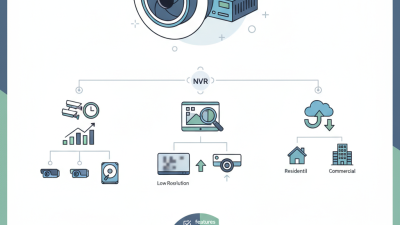
Choosing among China’s top 10 NVR Camera manufacturers requires more than comparing prices and megapixels. A reliable decision begins with real operating conditions. Consider a warehouse entrance, a retail counter, or a dim parking area after rain. Each scene exposes different weaknesses in image quality, storage performance, and remote access.
This guide examines manufacturers through practical criteria, including 4K clarity, low-light imaging, H.265 compression, PoE compatibility, ONVIF support, storage capacity, and firmware stability. It also considers warranty terms, technical support, production experience, and supply-chain consistency. A polished specification sheet is not enough. Some choices look excellent on paper. However, sample footage, product testing, and customer feedback often reveal important differences.
Bruce Schneier, a respected security technologist, said, “Security is a process, not a product.” His observation applies directly to NVR Camera selection. A recorder must protect footage throughout its working life, not only during installation. Buyers should review password controls, update policies, user permissions, encryption, and system recovery procedures. They should also test mobile applications and remote monitoring before placing a large order.
The manufacturers discussed here are not ranked only by market visibility. Their performance should be judged against project size, budget, installation environment, and after-sales expectations. A small office may need simple management, while a logistics center may require hundreds of synchronized channels. There is no perfect supplier for every project. That is an important limitation to remember. A careful comparison can still reduce replacement costs, installation delays, and disappointing surveillance results.
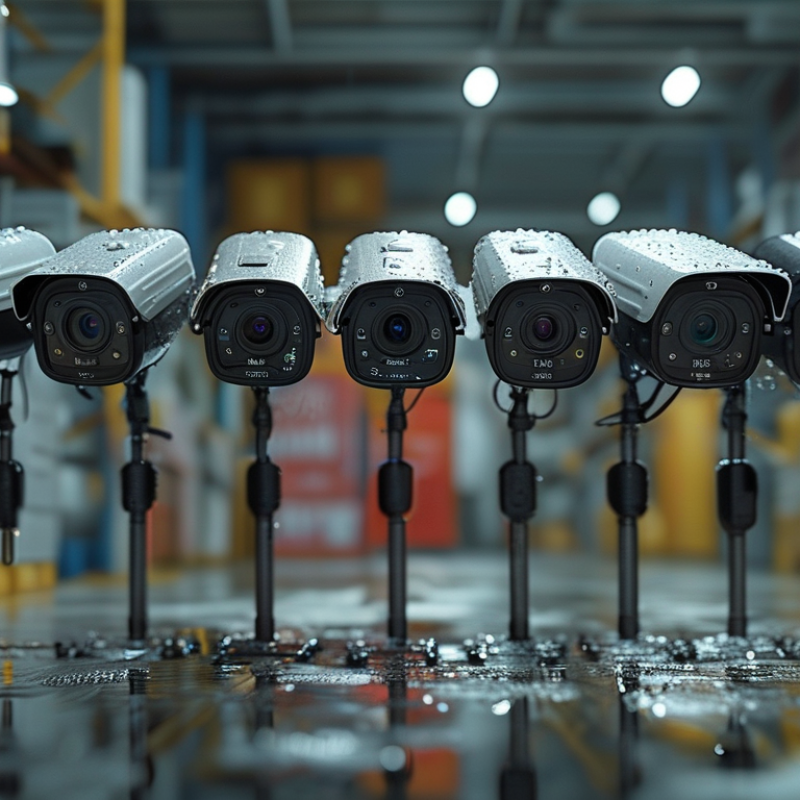
An NVR selection should begin with evidence, not a catalog ranking. Omdia’s 2024 video surveillance research identifies higher resolution and analytics as major upgrade drivers. For many sites, 4K or 8MP provides useful detail at entrances, loading areas, and payment points. However, resolution alone can mislead. A wide-angle 8MP image may show less facial detail than a carefully positioned lower-resolution camera. H.265 compression can reduce storage demand compared with H.264, but actual savings depend on movement, lighting, and frame rate.
PoE simplifies installation by carrying power and video through one network cable. Check each camera’s wattage, infrared load, and the switch’s total power budget. For storage, a 6 Mbps stream produces about 64.8 GB daily, or 1.94 TB over 30 days. Add at least 20% for overhead and bitrate variation.
A four-camera system therefore needs roughly 9.3 TB before redundancy. MarketsandMarkets’ 2024 surveillance report also highlights cloud, edge, and networked recording growth, yet local NVR storage remains practical where retention and control matter. My caution: constant 4K recording may be unnecessary in quiet zones.
Tips: Test one camera overnight. Review faces at the farthest required distance. Confirm H.265 playback, PoE compatibility, disk health alerts, and 30-day retention under real motion. A spreadsheet beats guesswork.
China’s top ten NVR manufacturers should be ranked by evidence, not production volume alone. ONVIF conformance is a practical starting point. It indicates tested interoperability with cameras, video management systems, and access-control devices. Check each supplier’s official ONVIF profile and model number. “Supports ONVIF” is not enough.
ISO 9001 certification strengthens the ranking, but certificate scope matters. A factory may hold certification for design and assembly, while firmware support remains unclear. The 2022 ISO Survey recorded more than 1.2 million ISO 9001 certificates worldwide, showing broad adoption but not automatic product quality. Market reach adds another layer. According to MarketsandMarkets, the global video surveillance market was projected to grow from about USD 53.7 billion in 2023 to USD 83.3 billion by 2028. Export coverage, local service teams, firmware update history, and distributor training should therefore influence each position.
A reliable top-ten assessment can score ONVIF at 40%, ISO 9001 evidence at 25%, and market reach at 35%. The highest-ranked supplier should offer clear conformance records, stable NVR firmware, multilingual documentation, and support across several regions. The next positions may reflect strong certification but weaker service networks. That difference matters.
Field testing is still necessary. A report can miss a night-time decoding failure. Include PoE load checks, storage recovery tests, and mixed-camera compatibility trials. The ranking will never be perfect, especially when market data changes quickly. That uncertainty should be stated openly.
China Top 10 NVR Camera Manufacturers: How to Choose?
When comparing China’s top ten NVR camera manufacturers, test AI detection under real conditions. Use moving people, parked vehicles, rain, shadows, and crowded entrances. Measure false alarms, missed events, search speed, and evidence quality. A clear dashboard is useful. Yet marketing claims can hide weak testing methods. Ask for independent accuracy results and repeat the trial yourself.
Cybersecurity requires a NIST-aligned checklist. NIST Cybersecurity Framework 2.0 emphasizes Govern, Identify, Protect, Detect, Respond, and Recover. Check unique passwords, multi-factor authentication, encrypted video, secure boot, audit logs, and signed firmware. The 2024 Verizon Data Breach Investigations Report found credential abuse caused 22% of breaches, while vulnerability exploitation caused 14%. Mandiant’s M-Trends 2024 report recorded a 10-day median dwell time in 2023. Ten days is enough to expose careless NVR settings.
Firmware support often separates dependable systems from cheap replacements. Request a published support period, vulnerability advisories, update frequency, rollback controls, and an SBOM. Test one update before deploying hundreds of devices. It may fail. That possibility matters. Confirm whether old models receive security fixes, not only new features. Record every answer, version number, and promised response time. A vendor that cannot explain its process deserves a lower score.
This evidence-based checklist assigns review points to the areas that matter most when evaluating NVR solutions. The checks cover AI detection accuracy, cybersecurity controls, firmware lifecycle support, and NIST Cybersecurity Framework 2.0-aligned governance and incident-readiness practices. The values represent the number of verification items in the checklist, not vendor or brand scores.
Choosing among China’s top NVR manufacturers requires more than comparing channel counts and quoted prices. Total cost depends heavily on compression, storage, and electricity. Industry reports, including MarketsandMarkets’ 2024 video-surveillance analysis, identify storage efficiency and energy consumption as major lifecycle-cost factors. Engineering benchmarks commonly show H.265 reducing bitrate and storage needs by 30–50% compared with H.264, depending on motion, lighting, resolution, and frame rate.
Consider sixteen 4MP cameras recording continuously. If H.264 requires 8TB for a retention period, H.265 may need approximately 4.8–5.6TB. Keep extra capacity for metadata, bitrate peaks, and failed-drive replacement. A spreadsheet can still mislead. Night scenes often create larger files than expected. Test sample footage before approving a large purchase.
Power calculations also matter. Assume each camera uses 8W, the NVR uses 40W, and the PoE switch uses 60W. The system draws about 228W continuously, or roughly 1,997kWh annually. At $0.15 per kWh, electricity costs about $300 per year, excluding cooling and backup power.
IEEE 802.3af allows up to 15.4W per PoE port, while 802.3at allows up to 30W. Check infrared illumination and analytics loads carefully. Request measured operating power, codec test files, storage calculators, warranty terms, and interoperability evidence before selecting a manufacturer. Performance claims without test conditions deserve caution.
China Top 10 NVR Camera Manufacturers: How to Choose?
A top-ten list is only a starting point. A reliable supplier must prove compatibility with your existing cameras, switches, and monitoring software. Request a sample NVR before placing a large order. Test ONVIF discovery, RTSP streams, PoE negotiation, audio, alarms, and remote playback. Use the exact camera models planned for deployment. Test night footage too. Small details matter.
During a practical pilot, check whether the NVR records continuously without dropped frames. Measure storage accuracy against the supplier’s calculation. Confirm support for your preferred codecs, resolution, frame rate, and hard-drive capacity. A one-week test is useful, but it may not reveal seasonal network problems. That is an uncomfortable limitation.
Warranty terms deserve the same attention as technical specifications. Ask for coverage length, repair procedures, replacement timelines, firmware support, and responsibility for shipping. Ensure the contract explains what happens when a repaired unit fails again. Avoid vague promises such as “lifetime support.” They sound reassuring, but they are difficult to enforce.
Calculate the three-year total cost of ownership before comparing prices. Include NVRs, cameras, storage drives, licenses, electricity, installation labor, maintenance, and possible replacements. A cheaper recorder may consume more power or require costly software subscriptions. Request written quotations with identical assumptions. Recheck every number. Calculations can still miss emergency labor and downtime, which often become the most expensive items.
Use this supplier-verification matrix before comparing quotations. The technical thresholds are based on commonly used IP-video deployment requirements and should be confirmed with datasheets, sample testing, written warranty terms, and a three-year total-cost calculation.
| Category | Evaluation Dimension | Realistic Benchmark or Acceptance Value | Verification Method | Risk if Not Verified | Recommended Decision Rule |
|---|---|---|---|---|---|
| Compatibility | ONVIF support | ONVIF Profile S for basic video; Profile T is preferred for modern H.265 and event functions. | Connect cameras from at least two independent manufacturers and verify live view, playback, PTZ, audio, alarms, and motion events. | Video may display correctly while recording, playback, or alarm functions fail. | Require written confirmation and live test |
| Compatibility | Video codec support | H.264 and H.265; confirm main-stream and sub-stream profiles, frame rate, bitrate, and resolution limits. | Test 4MP, 5MP, 8MP, and 4K streams at the proposed frame rate for at least 24 hours. | Unexpected bandwidth consumption, recording gaps, or unsupported camera profiles. | Pass continuous recording test |
| Compatibility | Camera channel capacity | Choose 16, 32, or 64 channels according to the project; retain at least 15% spare channels for expansion. | Confirm the actual maximum number of simultaneous cameras, not only the advertised channel count. | Future cameras may require a second NVR or costly replacement. | Keep expansion headroom |
| Network | Incoming bandwidth | For 16 cameras at 4 Mbps each, the minimum stream load is approximately 64 Mbps; practical headroom should exceed 100 Mbps. | Calculate total primary-stream bitrate plus playback, remote access, and protocol overhead. | Dropped frames, delayed live view, and incomplete recordings during peak traffic. | Use measured bandwidth, not channel count alone |
| Power | PoE budget | Allow approximately 8–15 W per standard camera and more for infrared, heater, zoom, or PTZ models. | Compare the total PoE wattage with the NVR's rated PoE budget and test all ports simultaneously. | Night vision, PTZ movement, or cameras at the end of long cables may restart. | Maintain at least 20% PoE reserve |
| Storage | Recording capacity | Storage requirement depends on bitrate, camera count, recording hours, retention days, and RAID or redundancy settings. | Use: Storage ≈ bitrate × cameras × recording seconds × retention days ÷ 8, with a practical overhead allowance. | Retention period may be shorter than the project requirement. | Calculate from bitrate and retention |
| Storage | Hard-drive compatibility | Confirm support for surveillance-rated SATA drives, maximum drive capacity, total bays, and replacement procedures. | Request the supported-drive list and test recording after drive replacement or rebuild. | Drive errors, reduced retention, or warranty disputes caused by unsupported disks. | Obtain compatibility list in writing |
| Cybersecurity | Account and network security | Unique administrator passwords, role-based accounts, HTTPS, secure firmware updates, and disablement of unused services. | Check password policy, user permissions, TLS access, audit logs, update process, and default credentials. | Unauthorized access, weak remote access controls, or difficult incident investigation. | Reject products requiring permanent default credentials |
| Reliability | Environmental operating range | Common indoor equipment ratings are approximately 0°C to 40°C; verify wider ranges for cabinets, warehouses, and outdoor enclosures. | Review the official specification and check thermal protection, fan design, and installation clearances. | Overheating, unexpected shutdowns, shortened drive life, or condensation damage. | Match rating to actual installation conditions |
| Warranty | Warranty duration and scope | Compare 24-month and 36-month terms, including NVR, PoE ports, power supplies, storage devices, and accessories. | Request a signed warranty document covering repair, replacement, freight, exclusions, and response times. | Low initial price may result in high replacement and shipping costs. | Prefer clearly defined 36-month coverage |
| Warranty | Dead-on-arrival and RMA process | Require a documented DOA window, advance replacement conditions, return authorization process, and maximum response time. | Ask for the RMA workflow and record who pays transportation, testing, and customs-related costs. | Long downtime and uncertain service expenses during failures. | Include service levels in the purchase contract |
| Support | Firmware and software lifecycle | Confirm security-update process, firmware availability, release notes, configuration backup, and compatibility across versions. | Request the latest firmware, update instructions, product end-of-life policy, and archived release history. | Security vulnerabilities or incompatibility after camera and browser updates. | Require documented update support |
| Testing | Seven-day interoperability test | Use the proposed NVR with the actual camera models, network switches, storage drives, and monitoring software. | Record continuously for seven days and test reboot recovery, network interruption, playback, export, alarms, and time synchronization. | Short demonstrations may hide intermittent recording or integration failures. | Do not approve on specification sheets alone |
| TCO | Three-year total cost of ownership | 3-year TCO = equipment price + storage + licenses + installation + shipping + power + maintenance + replacement risk. | Compare quotations using the same camera count, retention period, warranty scope, shipping terms, and labor assumptions. | The lowest purchase price may become the most expensive option over the operating period. | Select the lowest verified TCO, not the lowest quote |
| TCO | Power-cost assumption | Annual electricity cost = average power in kW × 8,760 hours × local electricity rate. | Use measured power consumption under normal recording and night-vision conditions. | Actual operating cost may exceed the budget, especially for always-on systems. | Use measured or documented power data |
| Procurement | Supplier evidence package | Datasheet, compliance declarations, ONVIF information, firmware policy, warranty, RMA terms, test report, and itemized quotation. | Check that the documents identify the exact model, hardware revision, software version, and delivery configuration. | Different hardware revisions may be supplied under the same general product description. | Do not compare incomplete documentation |