Top Tips for Choosing Solar Powered Security Cameras?
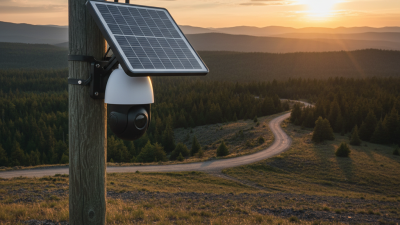
Choosing the right security camera can be challenging, especially with so many options available. A Solar Powered Security Camera stands out due to its eco-friendly features and independence from wired power sources. Imagine a system that remains functional even during power outages, enhancing your home’s security effortlessly. These cameras capture critical moments without the hassle of battery replacements or complex installations.
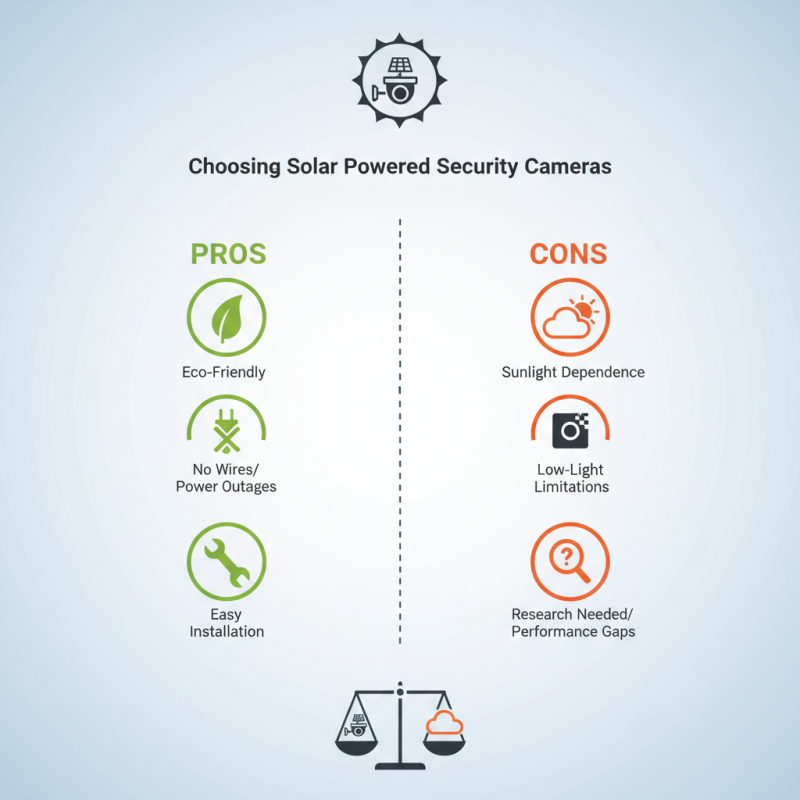
Understanding the unique benefits of a Solar Powered Security Camera can help you make a smarter choice. They are easy to install and often come with advanced features. However, potential buyers must consider factors like sunlight exposure and camera resolution. Not all solar cameras perform well in low-light conditions, which might limit their effectiveness.
While the appeal of solar technology is strong, there are trade-offs. It's vital to do thorough research, as not every product lives up to its promises. You may find some devices require more sunlight than anticipated, affecting performance. By carefully weighing these aspects, you can select a camera that meets your security needs effectively.
Understanding Solar Powered Security Cameras and Their Benefits
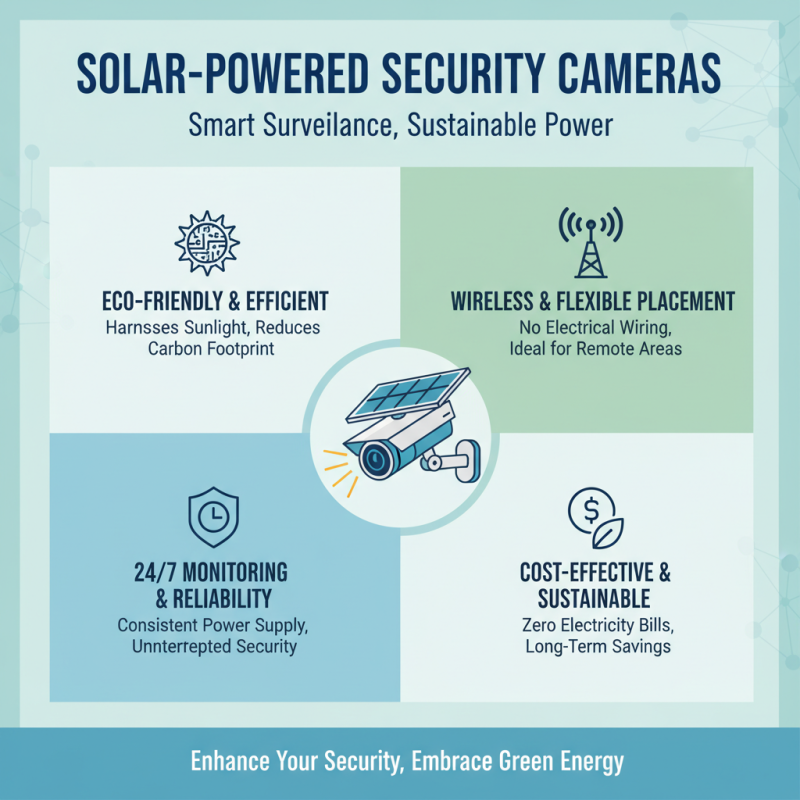
Solar powered security cameras have gained popularity due to their convenience and eco-friendliness. These cameras harness sunlight to operate, eliminating the need for electricity. This means you can install them in remote areas without easy access to power sources. They provide a sustainable surveillance solution that can lower your carbon footprint. When properly placed, they can offer you around-the-clock monitoring, making them highly effective.
However, it’s important to note that solar powered cameras can be influenced by weather conditions. If the sunlight is limited, battery life may be compromised. Regular maintenance is essential to ensure the solar panels are clean and positioned correctly. Additionally, consider the camera’s battery capacity and how often it’s exposed to sunlight. Research suggests that optimal locations can enhance performance, but initial setups may require some trial and error.
Understanding the benefits of these cameras can help you make informed decisions. They are often designed with advanced features, such as motion detection and night vision. Yet, not all models are created equal, and reliability can vary. Assess your specific needs, and ensure you choose a model that fits your circumstances. Careful consideration of these aspects will yield the best results for your security needs.
Key Features to Consider When Choosing Solar Powered Security Cameras
When selecting solar powered security cameras, several key features stand out. The ideal model should have a robust battery life, allowing it to function during cloudy days or at night. Industry reports indicate that a camera with a battery life of over 30 days is preferable for optimal performance. Look for models equipped with high-quality video resolution. A minimum of 1080p can provide clear images for better identification.
Another essential feature is weather resistance. Cameras need to withstand various environmental conditions. An IP66 rating is a good benchmark, ensuring the device can resist dust and heavy rain. Many users overlook this aspect, risking system failure during adverse weather.
Consider storage options and connectivity as well. Some cameras offer local storage, while others favor cloud options. Choose based on your security needs and budget. A report by the Security Industry Association highlights that 60% of users prefer hybrid storage systems for flexibility. Lastly, ease of installation is crucial. A complicated setup can deter users from properly utilizing these cameras. An installation process that takes under an hour is ideal for most homeowners.
Evaluating Battery Life and Charging Efficiency of Solar Cameras
When considering solar-powered security cameras, evaluating battery life and charging efficiency is pivotal. A reliable camera should have a long-lasting battery, allowing for continuous surveillance without frequent recharges. Most solar cameras have integrated batteries charged by solar panels. However, the efficiency of this charging varies.
It's crucial to assess the amount of sunlight your installation area receives. In shady spots, charging may be inadequate, leading to reduced battery life. Some cameras have indicators for solar charge levels. This feature helps you monitor performance and decide if adjustments are needed. Alternatively, look for models that offer an optional backup charging method.
Weather impacts charging efficiency too. A rainy season can affect solar energy production. Understanding these factors is essential to ensure that your camera remains functional. Testing different placements on your property may reveal the ideal spot. Regular monitoring is also necessary to detect any drop in efficiency over time. This vigilance ensures your security system remains dependable.
Top Tips for Choosing Solar Powered Security Cameras
| Feature |
Description |
Battery Life |
Charging Method |
Climate Efficiency |
| Camera A |
1080p HD video with night vision |
Up to 6 months on a full charge |
Solar powered with backup battery |
Works effectively in sunny and mild conditions |
| Camera B |
4MP resolution with smart alerts |
Up to 3 months on a full charge |
Integrated solar panel |
Optimal performance in moderate climates |
| Camera C |
180-degree field of view with two-way audio |
Up to 8 months on a full charge |
Solar and USB charging |
Performs well in various weather conditions |
| Camera D |
Pan-tilt-zoom functionality |
Up to 5 months on a full charge |
Charge via solar panel or AC adapter |
Best in sunny climates |
Assessing Image Quality and Performance in Various Conditions
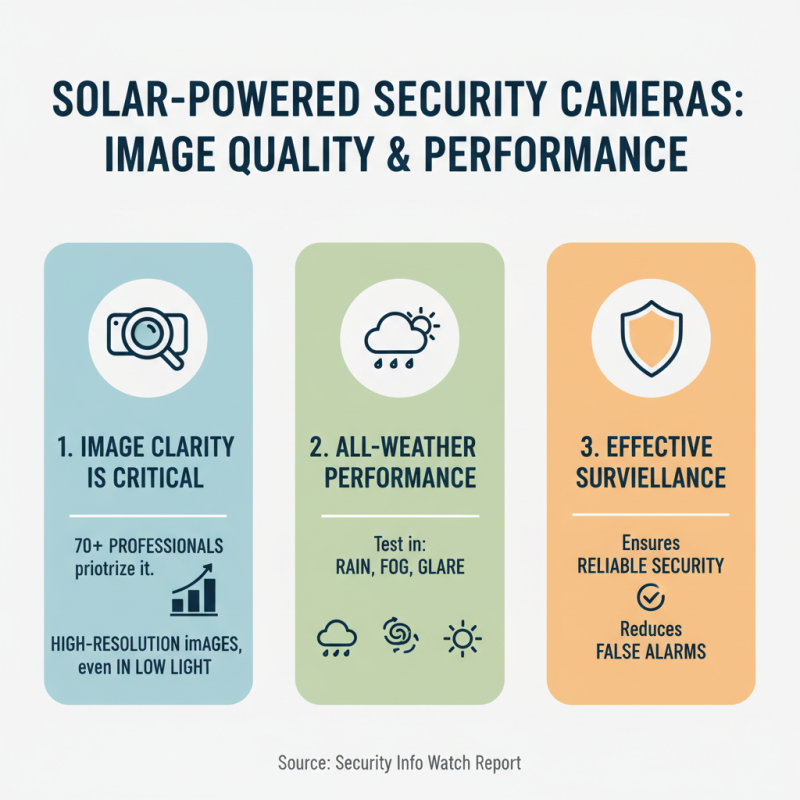
When selecting solar powered security cameras, image quality and performance in various conditions are critical factors. According to a report by Security Info Watch, over 70% of professionals emphasize image clarity for effective surveillance. Cameras should deliver high-resolution images, even in low light. Testing the camera's performance in various weather conditions is also essential. Rain, fog, and glare can significantly affect visibility.
Tip: Always check the camera's specifications for low-light performance. Look for models that offer night vision capabilities. Meeting harsh conditions is vital. The IP rating indicates the durability against dust and water. Cameras rated at least IP67 are ideal for outdoor settings.
Another important aspect is the camera’s response to motion detection. A study by the Electronic Security Association found that high-quality motion sensors reduce false alarms by over 40%. This enhances the reliability of the security system.
Tip: Keep an eye on user reviews regarding motion detection. Monitor how devices perform under real-life conditions. Choosing a quality camera now will pay off in the long run. Ensure you invest time in research for the best results.
Comparing Costs and Brand Reputation in the Solar Security Market
When navigating the solar security camera market, understanding costs and brand reputation is crucial. Prices can vary widely. Entry-level models may start around a few hundred dollars. High-end options can exceed a thousand. It’s important to assess what features justify these prices. Some cameras boast high-definition video and advanced motion detection. What’s missing in cheaper models? Often, durability and advanced tech. Analyze features that add real value.
Brand reputation plays a vital role in your decision-making process. Well-established brands often have a track record. Look for customer reviews and ratings. Consider their support options. A brand that doesn’t address customer concerns effectively may not be reliable. This can impact your overall experience. Emerging brands might offer lower prices, but do they stand the test of time? Research thoroughly and weigh experiences shared by users before making a choice.
Cost and reputation intertwine in the buying process. A high price doesn’t guarantee quality. Sometimes, less recognized brands present great innovations. However, it raises a question: is the risk worth it? Balancing cost, features, and reputation demands reflection. Stay informed and revisit your options regularly to ensure your choice aligns with your security needs.