Leave Your Message

China Top Indoor Solar CCTV Camera Manufacturers?

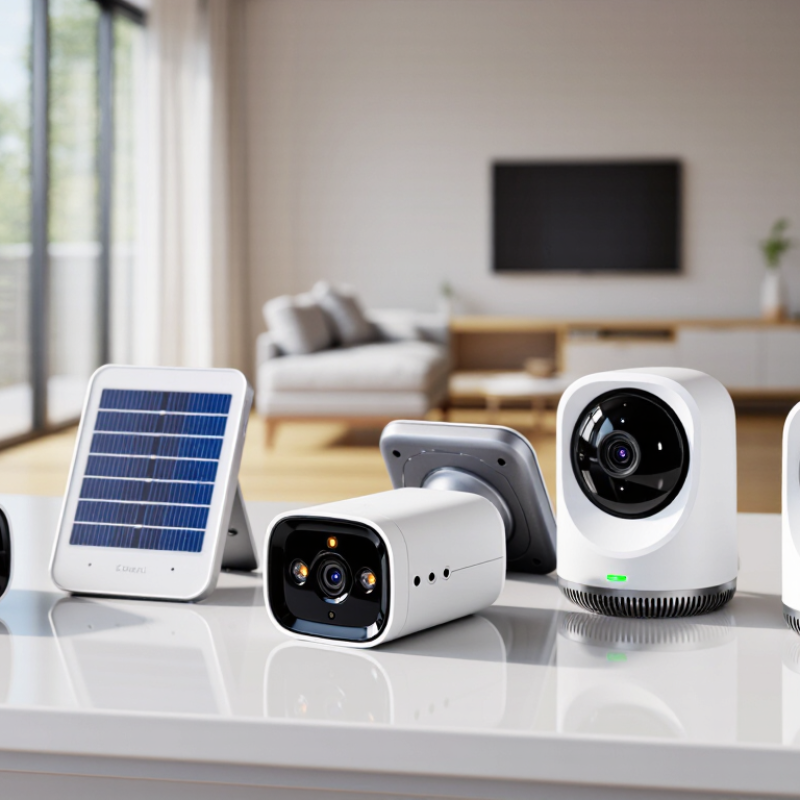
China has become a major manufacturing base for connected surveillance equipment, including compact indoor security devices. This guide examines China’s top Indoor Solar Cctv Camera manufacturers through product capability, engineering quality, and supply-chain reliability.

The International Energy Agency reported that global solar photovoltaic additions reached about 420 gigawatts in 2023. That growth supports wider interest in solar-powered electronics, but indoor harvesting remains more difficult. Window light, LED brightness, and room orientation can change charging performance sharply. Omdia’s video surveillance research also identifies network cameras, analytics, and cloud connectivity as important industry growth areas. These trends explain why buyers are seeking smaller cameras with rechargeable batteries, wireless links, and lower maintenance needs.

Real testing matters.

A credible manufacturer should provide lux-based charging data, battery-cycle results, night-vision samples, and clear operating-temperature ranges. Product teams should also explain whether the panel is truly solar-powered or merely a low-light energy supplement. That distinction is often overlooked. It can affect recording time, installation location, and customer expectations.

This overview will compare Chinese suppliers by manufacturing experience, optical quality, firmware stability, solar-battery design, and after-sales support. Relevant evidence may include ISO 9001 quality systems, documented factory audits, and applicable product safety certifications. Buyers should verify every certificate independently, because a logo alone proves little. The strongest suppliers usually offer sample testing, customized firmware, stable component sourcing, and transparent warranty terms. Still, no ranking can replace a room-level trial. A camera that performs well beside a bright window may fail in a shaded hallway. That uncomfortable limitation deserves attention.

China Top Indoor Solar CCTV Camera Manufacturers?

What Defines an Indoor Solar CCTV Camera?

What Defines an Indoor Solar CCTV Camera?

An indoor solar CCTV camera is not simply a smaller outdoor camera. It must harvest weak light through a window, lamp, or bright ceiling. Indoor illumination often ranges from 100 to 500 lux. That is far weaker than direct sunlight. Therefore, the camera needs an efficient photovoltaic cell, a low-power processor, and a battery sized for dark hours.

The 2024 IEA PVPS Trends report recorded more than 400 GW of new solar capacity worldwide in 2023. However, that figure mainly represents outdoor solar systems. Indoor harvesting remains a stricter engineering challenge. The Fraunhofer ISE Photovoltaics Report 2024 notes that commercial modules commonly exceed 20% efficiency under standard testing. Those conditions do not match indoor lighting. In practice, motion detection, standby power, Wi-Fi transmission, and night vision can consume more energy than expected. A camera may operate reliably near a bright window, then struggle after curtains close. That limitation deserves honest testing.

Tips: Check energy performance at 100, 300, and 500 lux. Ask for battery capacity, standby consumption, and night-recording duration. Look for compliance with IEC 62676 performance principles. A 1080p image is useful, but stable connectivity matters more. Also inspect the panel angle and dust resistance. Small details matter.

What Defines an Indoor Solar CCTV Camera?

Image resolution is one measurable way to compare indoor solar CCTV cameras. Common formats range from 1080p to 4K, while a complete indoor solar design also depends on low-power operation, rechargeable battery capacity, efficient indoor-light solar charging, Wi-Fi connectivity, infrared night vision, motion detection, and compact installation.

How Do Indoor Solar CCTV Cameras Work?

An indoor solar CCTV camera uses photovoltaic cells to turn light into electrical energy. The panel may sit beside a window, on a shelf, or near a skylight. It charges a rechargeable battery during daylight hours. A power-management circuit controls charging and protects the battery from unstable current. The camera then draws energy from that battery when recording or transmitting video.

Indoor lighting is usually weaker than direct sunlight. That difference matters. A bright room may still provide too little energy for continuous recording. In practical testing, motion-triggered recording often performs better than nonstop video. The camera wakes when its sensor detects movement, captures footage, and returns to a low-power state. Infrared night vision consumes more power, especially in dark rooms. Wi-Fi transmission adds another steady drain.

Placement affects reliability. Glass can reduce incoming solar energy, while curtains may block it completely. Dust on the panel also lowers charging efficiency. I have found that a window-facing position works best, but it is not always attractive or practical. Battery capacity, light levels, recording settings, and network strength should be checked together. A camera can show a full battery in the afternoon yet struggle overnight. That assumption is easy to miss. Privacy settings and local data-storage options also deserve attention, particularly when the camera views shared indoor spaces.

China Top Indoor Solar CCTV Camera Manufacturers? - How Do Indoor Solar CCTV Cameras Work?
Evaluation Dimension Typical Technical Data How the System Works What to Verify When Selecting a Manufacturer
Indoor Solar CCTV Operating Principles
Energy source Photovoltaic solar panel connected to a rechargeable battery Solar cells convert light into direct-current electricity. A charge controller regulates the current before it reaches the battery and camera electronics. Confirm whether the product is designed for indoor light, window-side placement, or an externally mounted solar panel.
Indoor light availability Typical indoor illumination is about 100–500 lux; direct outdoor sunlight can exceed 50,000 lux. Indoor light is much weaker than sunlight, so an indoor panel generally produces substantially less energy than the same panel outdoors. Request charging performance data at defined illuminance levels instead of relying only on outdoor solar-panel ratings.
Solar charging practicality Indoor photovoltaic charging is usually slow and may provide only limited supplemental energy. The camera can operate from stored battery energy while the panel gradually replenishes the battery. Continuous operation depends on light level, panel area, battery capacity, and camera power consumption. Check measured daily energy harvested indoors and compare it with the camera’s daily energy consumption.
Battery storage Rechargeable lithium-ion or lithium-polymer battery; capacity varies by model and operating mode. The battery supplies power when the room is dark or the solar panel cannot generate enough energy. A battery-management circuit protects against overcharge, over-discharge, and excessive temperature. Verify battery chemistry, rated capacity, replacement policy, charging cycles, and safety certifications.
Power-saving operation Standby, motion-triggered recording, scheduled recording, or low-frame-rate monitoring Most battery-powered cameras reduce energy use by keeping the processor, sensor, and wireless radio in a low-power state until motion or another event is detected. Ask for standby power, active recording power, wake-up time, and estimated runtime under a defined motion frequency.
Camera resolution Common consumer configurations include 1920 × 1080 Full HD and 2560 × 1440 2K. The image sensor captures video, the processor compresses it, and the system stores or transmits the data through a network connection. Confirm resolution at the actual frame rate, low-light image quality, lens angle, and compression format rather than using resolution alone.
Night vision Infrared LED illumination is commonly used for monochrome viewing in darkness. When visible light is insufficient, infrared LEDs illuminate the scene and an image sensor records reflected infrared light. Check infrared wavelength, practical night-vision distance, IR reflection control, and whether the LEDs affect battery runtime.
Motion detection Software-based video detection; some models add a passive infrared sensor. Video algorithms compare image changes between frames, while a passive infrared sensor detects changes in infrared radiation caused by moving people or objects. Verify detection distance, false-alarm filtering, sensitivity settings, privacy masking, and performance with pets or changing lighting.
Wireless connectivity Wi-Fi is commonly used for indoor network access; some products support local storage without cloud access. The camera sends live video and event notifications through the local network. A stable connection is required for remote viewing and cloud recording. Check supported Wi-Fi bands, encryption, antenna performance, offline recording, firmware updates, and cloud-service requirements.
Manufacturer and Product Capability Benchmarks
Solar-panel design Panel size, photovoltaic material, operating voltage, and indoor low-light sensitivity A larger active area can collect more light, while low-light photovoltaic cells may perform better under indoor illumination than panels optimized only for direct sunlight. Request panel electrical curves or test results at several indoor lux levels and ask whether the panel is detachable or remotely mountable.
Energy-balance testing Daily harvested energy compared with daily camera consumption, measured in watt-hours A system is energy-sustainable only when average harvested energy is equal to or greater than average consumption over the intended operating conditions. Require test conditions covering daylight duration, room illumination, motion frequency, video quality, and wireless transmission.
Runtime specification Runtime depends on battery energy, standby power, recording time, infrared use, and network activity. Longer runtime is achieved through a larger battery, lower standby consumption, less frequent recording, or stronger energy harvesting. Obtain separate runtime figures for standby, normal motion detection, continuous recording, and night operation.
Data storage MicroSD card, network video storage, cloud storage, or a combination Recorded video is encoded and written to local or remote storage. Event-based recording reduces storage and power requirements compared with continuous recording. Check supported card capacity, overwrite behavior, encryption, download format, subscription fees, and retention periods.
Privacy protection Privacy zones, lens shutter, microphone control, and account access controls Software masking can block selected areas of the image, while a physical shutter can prevent visual capture when privacy is required. Verify local privacy controls, user permissions, secure password policies, firmware support, and data-processing location.
Indoor installation Tabletop, wall, ceiling, magnetic, or adhesive mounting; panel orientation affects charging The camera needs a suitable viewing angle and reliable wireless signal, while the panel needs the brightest available position without obstruction. Assess cable length, mounting strength, panel adjustment range, window placement, and suitability for renters or temporary installations.
Environmental protection Indoor units may have limited protection against dust and moisture; outdoor-rated components require a stated IP rating. An IP rating indicates protection against solid particles and water under standardized test conditions, but it does not replace correct installation. Confirm the declared IP rating, operating temperature range, condensation resistance, and whether the camera or solar panel is intended for outdoor exposure.
Safety and compliance Electrical safety, radio, battery transport, and regional conformity requirements Compliance testing helps verify that the power system, wireless functions, battery, and charger meet applicable market requirements. Request valid test reports and declarations for the target market, along with battery safety documentation and traceable production records.
Quality-control capability Incoming inspection, aging tests, camera calibration, battery testing, and final functional testing Consistent testing reduces variation in image quality, charging behavior, wireless performance, and battery safety between production batches. Review inspection procedures, sampling standards, failure-rate data, warranty terms, spare-part availability, and after-sales response times.
Best-fit application Supplemental indoor charging Indoor solar CCTV is most practical in bright locations, near windows, or where low-power event monitoring is acceptable. It is less suitable for dark rooms or uninterrupted high-resolution recording without another power source. Select a manufacturer that clearly states the product’s energy limitations and provides test data for the intended room, lighting level, and surveillance schedule.
Technical note: “Indoor solar” does not mean that ordinary room lighting provides the same energy as outdoor sunlight. Actual performance depends on illuminance, panel area and efficiency, battery condition, camera power consumption, recording mode, wireless traffic, and daily operating time.

Key Features of China’s Leading Manufacturers

China’s leading indoor solar CCTV manufacturers combine compact optics, battery storage, and efficient wireless communication. The International Energy Agency’s Renewables 2024 report expects global solar capacity to grow strongly through 2030. That growth supports cheaper photovoltaic cells and better small-panel availability. For indoor use, manufacturers should specify charging performance near a window, not under ideal outdoor sunlight. Some solutions need six to eight hours of direct light daily. Real rooms are less predictable.

Technical strength appears in the details. Leading factories commonly offer 2MP or 4MP imaging, infrared night vision, motion detection, and two-way audio. A low-power chipset can extend standby time considerably. Battery capacity, charging cycles, and temperature protection deserve clear testing records. According to MarketsandMarkets’ Video Surveillance Market report, AI-based video analytics are driving demand for smarter surveillance systems. However, indoor cameras should process basic events efficiently, rather than advertise complicated features with weak accuracy. That distinction matters.

Reliable Chinese manufacturers also provide firmware updates, sample testing, and traceable quality control. Their production teams may support ODM customization, including private-label housings, multilingual applications, and different mounting brackets. UL, CE, RoHS, and regional radio compliance documents should be verified independently. The 2024 Omdia video surveillance research indicates continued demand for networked cameras and cloud-connected management. Still, cloud dependence can increase privacy concerns and operating costs. A practical manufacturer should offer local storage, encrypted transmission, and clear data-retention settings. The category remains imperfect: “solar indoor” often means solar-assisted backup, not complete energy independence.

How to Compare Chinese Indoor Solar CCTV Suppliers

Comparing Chinese indoor solar CCTV suppliers starts with usable energy, not camera resolution. IEA PVPS reported 456 GW of new global solar capacity in 2023. Indoor harvesting is much smaller, however. A supplier should provide charging tests at 200, 500, and 1,000 lux, not only outdoor sunlight results. Ask for voltage, current, charging time, and standby consumption. A 2,000 mAh battery sounds impressive until the camera consumes power continuously.

Check the test conditions carefully. The Fraunhofer ISE Photovoltaics Report shows how strongly photovoltaic output depends on technology and operating conditions. Indoor light adds another variable. Request tests under LED and fluorescent lighting, with the panel behind glass or a diffuser if that matches your installation. Short videos help. Raw measurement files help more. Do not accept “all-day charging” without a lux value.

Supplier reliability also needs physical and technical checks. Confirm cell composition, battery protection, operating temperature, image performance, data encryption, firmware support, and replacement procedures. IEC 62676 is a useful reference for video surveillance performance requirements. Ask whether the supplier tests night vision and motion detection together, because infrared lighting can drain the battery quickly. Factory audits, sample inspection, and a small pilot order reveal more than polished brochures. One weakness remains: indoor solar output changes with room use. No spreadsheet removes that uncertainty. A supplier that admits it may be more credible than one promising unlimited operation.

What Should Buyers Check Before Ordering?

Buying from China’s indoor solar CCTV manufacturers requires more than comparing resolution and price. Ask for measured energy performance under indoor lux levels, not outdoor sunlight. A window-side panel may harvest enough energy, while a hallway may not. IEA PVPS Trends 2024 reported over 400 GW of global solar capacity added in 2023. That growth does not prove a small indoor panel will power a camera reliably. Request laboratory records showing daily energy output, standby consumption, night-vision demand, and battery endurance.

Check the camera’s image quality at three metres, especially in dim rooms. Confirm whether local storage works during internet outages. Ask for firmware-update procedures, encryption details, user-access controls, and independent cybersecurity testing. IEC 62676 provides useful guidance for video surveillance performance. ONVIF compatibility can also reduce integration problems, but compatibility claims should be tested with your recorder. I would not trust a certificate photo alone. Verify its number, scope, and issuing laboratory.

Tips: Order one sample before a container quantity. Test it for seven days near the intended window. Record lux levels, charging time, false alarms, and overnight battery loss. Request the battery cell specification and a written warranty. Also inspect the factory’s quality records, production consistency, and after-sales response time. One overlooked detail is heat. A dark window frame can raise internal temperature and shorten battery life. Manufacturers should provide thermal and cycle-test data, not only attractive product photographs.