What Skills Do You Need to Become a Security Engineer?
Becoming a Security Engineer is a challenging yet rewarding journey. In today's digital landscape, this role is crucial for organizations. Security Engineers protect systems from cyber threats and vulnerabilities. They work relentlessly to protect sensitive data and maintain user trust.
Understanding the required skills is essential for aspiring Security Engineers. Technical know-how in areas like network security, cryptography, and incident response is vital. However, soft skills such as problem-solving, critical thinking, and communication also play significant roles. Continuous learning is key, as the security field changes rapidly.
Reflecting on past experiences can illuminate essential growth areas. Mistakes made in earlier projects often become valuable lessons. Emphasizing diverse knowledge and practical experience strengthens one's position in the field. A well-rounded Security Engineer not only safeguards systems but also collaborates effectively with teams.

Essential Technical Skills for Security Engineers in Modern IT Environments
In today’s IT landscape, security engineers must possess a variety of essential technical skills. A strong foundation in networking is crucial. Understanding protocols, firewalls, and network security measures is necessary to protect data effectively. Security engineers should also be adept at penetration testing. This skill allows them to identify vulnerabilities before they can be exploited by malicious entities.
Moreover, familiarity with encryption techniques is vital. Security engineers often handle sensitive information and must ensure it is protected during transmission. Practical knowledge of operating systems, particularly Linux and Windows, is also important. Each system has unique security challenges that require tailored approaches.
Communication skills cannot be overlooked. Security engineers must explain complex concepts to non-technical stakeholders. Being able to convey potential risks is critical. The field of cybersecurity is always evolving, making continuous learning essential. Engaging with new technologies can be overwhelming. Security engineers need to be adaptable and open to change for effective threat management.
Understanding Risk Assessment and Management in Cybersecurity Roles
Understanding risk assessment and management is crucial for aspiring security engineers. Cybersecurity professionals must identify vulnerabilities and threats to mitigate risks effectively. According to the 2023 Cybersecurity Insiders report, 60% of organizations acknowledge that risk assessment is essential for their cybersecurity strategy. This highlights the industry's focus on understanding risks.
Risk management involves continuous evaluation. It requires professionals to adapt as new threats emerge. A survey by ISC² indicated that over 85% of security professionals believe evolving cyber threats influence their assessment strategies. Security engineers must develop skills in threat modeling and risk prioritization. They should not only understand technical vulnerabilities but also human factors, as employee behavior impacts security.
Recognizing limitations in existing assessments is important. Many organizations struggle with outdated frameworks that do not foresee modern threats. Therefore, security engineers should refine their approaches consistently. Embracing tools like automated risk assessment software is vital. However, relying solely on technology can lead to blind spots. Balancing human insight with automation may offer the most comprehensive risk management.
What Skills Do You Need to Become a Security Engineer? - Understanding Risk Assessment and Management in Cybersecurity Roles
| Skill Area |
Description |
Importance Level (1-5) |
| Risk Assessment |
Ability to identify, analyze, and manage risks associated with IT assets. |
5 |
| Incident Response |
Skills to effectively respond to security breaches and mitigate impacts. |
5 |
| Security Policies |
Understanding of compliance standards and the ability to develop security policies. |
4 |
| Network Security |
Knowledge of network protocols, firewalls, VPNs, and intrusion detection systems. |
5 |
| Encryption Techniques |
Understanding of various encryption methods and their applications in data protection. |
4 |
| Vulnerability Assessment |
Ability to conduct thorough assessments to identify weaknesses in systems. |
5 |
| Security Tools |
Familiarity with tools like SIEM, IDS/IPS, and anti-virus software. |
4 |
| Communication Skills |
Ability to convey complex security concepts to non-technical stakeholders. |
3 |
Certifications That Enhance Career Prospects for Security Engineers
The demand for security engineers is soaring, with a projected growth rate of 31% by 2029, according to the Bureau of Labor Statistics. To thrive in this field, possessing relevant certifications can significantly enhance your career prospects. Certifications, such as Cerftified Information Systems Security Professional (CISSP) and Certified Ethical Hacker (CEH), are highly regarded. They not only validate technical skills but also demonstrate a commitment to the profession.
Acquiring these certifications often requires rigorous study and practical experience. Many candidates argue that the preparation process can be overwhelming. However, this challenge often leads to deeper understanding. Nearly 70% of hiring managers view these credentials as essential for potential hires. Despite the demanding nature of these programs, they provide invaluable networking opportunities and career advancements.
Furthermore, security engineers must stay updated on the latest threats and technologies. Continuous learning through certifications can be time-consuming. Still, industry reports indicate that professionals with multiple certifications earn up to 20% more than their peers. The investment in skills and credentials pays off in the long run, making it a critical step for those aiming to excel in this dynamic industry.
The Importance of Soft Skills in Security Engineering and Team Collaboration
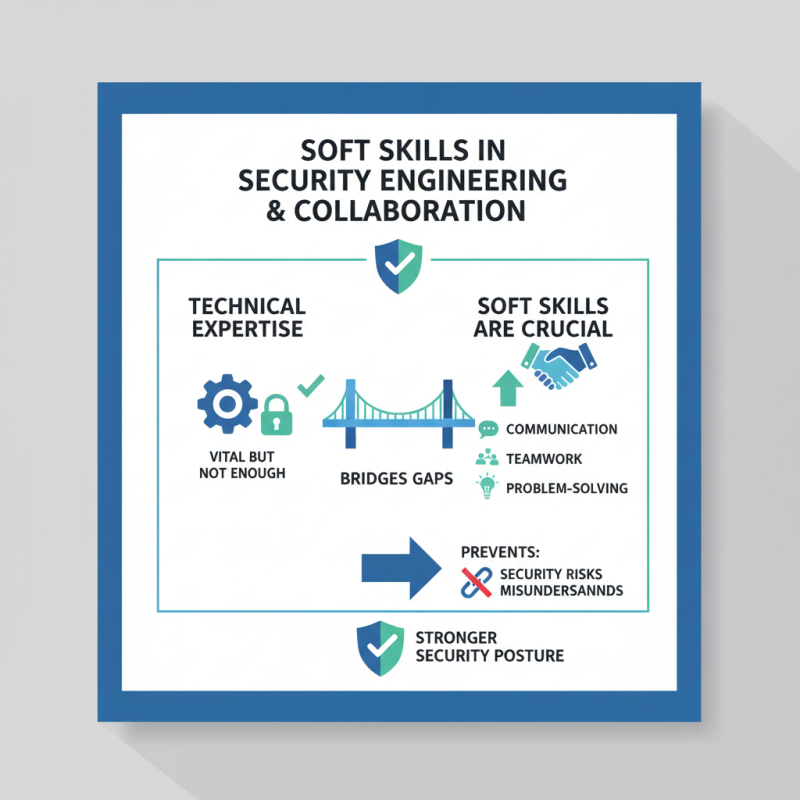
In the realm of security engineering, technical expertise is vital, yet soft skills are equally essential. Strong communication fosters collaboration among team members. Security engineers often work in cross-functional teams. Clear and concise dialogue can help prevent misunderstandings. Miscommunication can lead to security gaps, which is a risk no organization can afford.
Additionally, problem-solving skills are crucial. Security breaches are unpredictable and fast-moving. An effective engineer must think critically and adapt quickly. Collaboration can enhance creative solutions. Engineers who share their insights contribute to a more robust defense strategy. Active listening also plays a key role in understanding team dynamics. Sometimes, the best ideas come from collective discussions.
Emotional intelligence is often overlooked. Security engineers must manage stress and remain calm under pressure. This calm can instill confidence in team members. Building rapport creates a supportive environment. Engineers should reflect on their interactions. Understanding how to improve communication can lead to better outcomes.
Staying Updated: Continuous Learning and Industry Trends in Security Engineering
In the ever-evolving field of security engineering, continuous learning is crucial. Cyber threats are constantly changing. A good security engineer must remain vigilant. They need to adapt to the latest vulnerabilities and attack vectors. Regularly attending webinars and conferences is essential. These events expose engineers to new ideas and technologies.
Moreover, engaging with online communities can enhance skills. Forums and discussion groups allow sharing knowledge and experiences. However, self-learning can be challenging. Overconfidence in existing skills may hinder growth. It’s important to recognize the gaps in knowledge. A structured approach to learning is beneficial. Online courses offer a wide range of topics for continued education.
Staying updated involves a commitment to research. Following reputable blogs and academic journals is vital. Reading security whitepapers keeps engineers informed about advances. This effort is not always easy or convenient. Many professionals struggle with time management. Yet, making learning a priority pays off. The ability to anticipate and respond to threats defines a successful career in security engineering.
Skills Required to Become a Security Engineer