How to Choose Solar Security Solutions for Your Business?
In an era where businesses need to prioritize safety, the role of Solar Security systems is increasingly vital. As Dr. Emily Thompson, a leading expert in renewable energy solutions, states, "Solar Security not only protects assets but also enhances sustainability." This highlights the dual benefits of such systems for modern enterprises.
Choosing the right Solar Security solution requires careful consideration. Businesses must evaluate their unique needs and the specific threats they face. Advanced technologies, including solar-powered cameras and alarms, offer reliable protection while promoting eco-friendliness. However, not all solutions are equal. Some might underperform or lack necessary features.
Companies should explore various options before making a decision. It can be tempting to choose the cheapest alternative. However, this could lead to inadequate protection. Businesses must invest in quality systems that effectively safeguard their properties. Solar Security is a long-term investment in safety and sustainability.
Understanding Solar Security Solutions and Their Benefits
When considering solar security solutions, understanding their benefits is crucial. Solar security systems harness renewable energy to power security devices. This reduces reliance on conventional energy sources. In fact, a recent industry report found that 40% of businesses have already integrated solar technology into their security infrastructure. This shift not only lowers energy costs but also impressively supports sustainability goals.
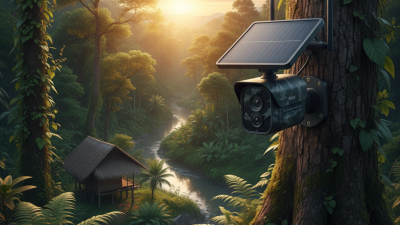
Comprehensive solar security solutions often include solar-powered cameras, alarms, and motion sensors. These devices can function independently, which is vital in remote locations where traditional power is unreliable. A study indicated that businesses utilizing solar security saw an increase in trespasser deterrence by up to 50%. Despite these benefits, organizations must assess their current security needs. Not every business has the same requirements or environment, which makes a tailored approach essential for effectiveness.
Another consideration is the initial investment. While long-term savings are appealing, upfront costs can be a hurdle. Businesses should analyze their budgets carefully before implementation. Additionally, maintenance aspects shouldn’t be overlooked. Solar panels require occasional cleaning and checks to ensure optimal performance. Understanding these nuances helps businesses make informed decisions about solar security systems.
Assessing Your Business Security Needs for Solar Solutions
Assessing your business security needs for solar solutions requires careful consideration. Start by evaluating the specific security challenges your business faces. Are you protecting valuable equipment? Is your location prone to theft or vandalism? Understanding these risks helps in selecting appropriate solar security solutions.
Consider the layout of your property. A well-lit area is crucial. Solar lights provide illumination without high energy costs. You can install motion sensors that activate when movement is detected. This not only deters intruders but also conserves energy.
Incorporating surveillance is another important factor. Solar-powered cameras can function in remote areas without an electrical source. Think about camera placement for maximum coverage. Review your policies on data storage and privacy. Regularly assess the effectiveness of your solar security measures. Are they truly addressing your security needs? Continuous evaluation will help refine your approach.
How to Choose Solar Security Solutions for Your Business? - Assessing Your Business Security Needs for Solar Solutions
| Security Needs |
Solar Solution Type |
Installation Considerations |
Estimated Cost |
| Perimeter Security |
Solar-Powered Cameras |
Mounting on poles; Requires good sunlight exposure |
$3,000 - $5,000 |
| Access Control |
Solar-Powered Gate Opener |
Requires secure location for solar panel |
$2,000 - $4,000 |
| Emergency Lighting |
Solar-Powered Flood Lights |
Positioned strategically for maximum illumination |
$500 - $1,500 |
| Intrusion Detection |
Solar-Powered Motion Sensors |
Should be placed in high-traffic areas |
$1,000 - $2,000 |
| Surveillance |
Solar-Powered Surveillance Drones |
Requires open airspace for operation |
$10,000 - $20,000 |
Evaluating Different Types of Solar Security Technologies
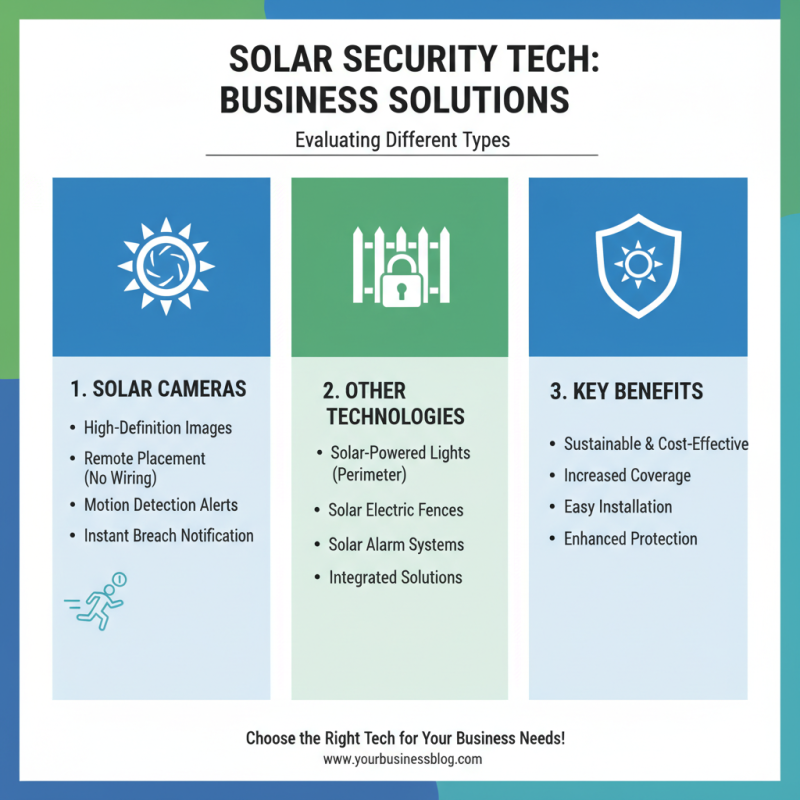
When choosing solar security technologies for your business, consider various options available in the market. Solar cameras are increasingly popular. They capture high-definition images and can be placed in remote locations without extensive wiring. These cameras often come with motion detection, which can alert you to potential breaches instantly.
Another option is solar-powered security lights. These lights enhance visibility around your premises. They can deter intruders simply by illuminating dark areas. However, it's essential to consider battery life and brightness. Some solutions may not provide adequate light for larger spaces. Regular maintenance is also necessary to ensure optimal performance.
Solar alarms, while less common, can be effective. They rely on solar panels to power their systems. However, the reliability of these alarms can vary. Environmental factors, such as heavy rain or snow, might affect their operation. It's crucial to evaluate these aspects. Look for technologies that combine efficiency and durability. Always assess your unique needs and challenges before making a final decision.
Factors to Consider When Selecting Solar Security Systems
When selecting solar security systems for your business, several key factors demand attention. Assess your security needs first. Different factors, like location and type of assets, influence system requirements. A 2022 report by the International Energy Agency noted that solar installations can reduce operational costs significantly while enhancing safety measures.
Battery storage capacity is another critical aspect. Energy storage systems keep security equipment operational during outages. The right battery can ensure your surveillance systems function even in emergencies. Research indicates that businesses using solar with adequate storage report up to 30% reduction in security-related incidents.
The installation process also requires thorough evaluation. While many systems promise easy installation, the real-world experience varies. Hiring professionals adds competence but may elevate costs. A report from the Solar Energy Industries Association in 2023 highlighted that complex installations often lead to higher maintenance issues. Addressing these complexities is key to effective long-term security solutions. Choose wisely to match security needs with sustainable energy benefits.
Comparison of Solar Security Solutions for Businesses
Budgeting and Financing Options for Solar Security Implementations
When selecting solar security solutions, budgeting and financing are critical. Understanding the costs involved can help businesses make informed decisions. Solar security systems vary in price and complexity. Initial costs may include equipment, installation, and maintenance. It's essential to evaluate the long-term savings compared to traditional systems.
Consider financing options when planning your budget. There are various approaches, such as loans, leases, or power purchase agreements (PPAs). Each method has its pros and cons. For instance, loans require upfront financial commitment but can lead to full ownership benefits. In contrast, leases and PPAs can lower initial expenses but might involve ongoing payments.
Don't overlook potential government incentives or rebates. These can significantly reduce the overall cost of installation. It’s also wise to explore local programs that support solar investments. However, always read the fine print. Not all incentives are straightforward, and terms can change. Balancing your budget with potential returns is crucial for effective decision-making.