How to Choose the Best 4G Solar Security Camera for Your Needs?
Choosing the right Solar Security Camera 4G for your needs is crucial in today's increasing security demands. With countless options available, making a decision can feel daunting. A well-suited camera provides reliable protection and peace of mind.
Consider your specific requirements carefully. Do you need remote access? Or perhaps motion detection features? The effectiveness of a Solar Security Camera 4G hinges on understanding these factors. Pay attention to battery life and video quality. They significantly influence performance. You want a camera that lasts, especially in remote locations.
Reflecting on your environment is essential. Outdoor conditions can affect camera functionality. Aesthetic design may also play a role in your selection. A perfect match isn't guaranteed. You might find trade-offs between features and price. The key is prioritizing what matters most for your security needs.
Understanding the Basics of 4G Solar Security Cameras
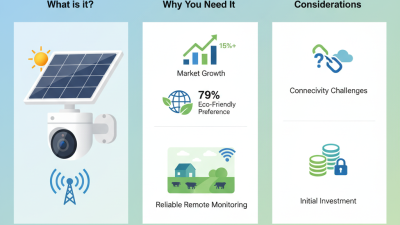
Understanding the basics of 4G solar security cameras can empower you to make informed decisions. These cameras combine solar power with cellular connectivity, offering flexibility for remote installations. Industry reports indicate that the global market for solar security cameras is projected to grow by 17% annually, highlighting their increasing demand.
When selecting a 4G solar security camera, consider factors such as battery life, field of view, and resolution. Cameras with high-resolution capabilities provide clearer images, which are crucial for identification. According to recent research, a camera with a resolution of at least 1080p is recommended for optimal performance in most settings. Battery longevity varies widely, sometimes lasting only a few days without direct sunlight.
Tip: Check if the camera has a motion sensor and night vision. These features enhance security and ensure utility in various lighting conditions. Users often overlook installation angles, which can significantly impact surveillance effectiveness. Ensuring optimal placement is essential for comprehensive coverage.
Reflection is necessary; despite impressive technology, limitations exist in cloud storage options and data security. A secure connection is paramount. Always look for additional protective measures, which can safeguard your footage from unauthorized access.
How to Choose the Best 4G Solar Security Camera for Your Needs?
| Feature |
Description |
Considerations |
| Resolution |
Quality of video captured (e.g., 1080p, 4MP) |
Higher resolution provides clearer images but requires more bandwidth. |
| Battery Life |
Duration the camera can operate without solar recharge |
Longer battery life is essential for areas with limited sunlight. |
| Night Vision |
Ability to capture footage in low light conditions |
Infrared vs. color night vision options. |
| Storage Options |
Methods of storage (cloud vs. local) |
Consider data privacy and ease of access. |
| Connectivity |
How the camera connects to the internet (4G, Wi-Fi) |
4G is advantageous for remote locations lacking Wi-Fi. |
| Weather Resistance |
Ability to withstand harsh weather conditions |
IP68 rating offers the best protection. |
| Mobile App Support |
Availability of an app for remote viewing and control |
A user-friendly app enhances convenience. |
| Cost |
Price range of the camera |
Higher features may come with a higher price tag. |
Key Features to Look for in 4G Solar Security Cameras
When selecting a 4G solar security camera, there are key features to prioritize. Look for high-resolution video quality. Cameras offering at least 1080p resolution can provide clear images. According to recent industry data, higher resolutions improve identification rates in security situations.
Battery life is critical when choosing a solar camera. Ideally, it should last several days without sunlight, ensuring consistent functionality. Some models claim to have up to 180 days of standby time, making them suitable for remote locations. A built-in rechargeable battery can enhance usability further.
Consider real-time monitoring capabilities. This feature allows users to check live feeds from anywhere, adding an essential layer of security. Look for cameras that offer mobile app integration for alerts and notifications. Tips: Ensure strong cellular connectivity at your location to utilize 4G capabilities fully. Additionally, assess the installation flexibility; some might need hard wiring, while others don’t.
Weather resistance is another crucial aspect. Ensure the model is rated for outdoor use, especially in harsh climates. Regular maintenance checks are vital to sustain performance over time. Finally, think about the camera's field of view. A wider angle can cover more area but can also mean lesser details. Aim for a balanced approach.
Assessing Your Specific Security Needs and Environment
When choosing a 4G solar security camera, assessing your specific security needs and environment is crucial. Understanding your property layout can help you determine optimal camera placement. According to a report by the Security Industry Association, 40% of property crimes are committed in outdoor areas. This indicates that proper placement can significantly reduce risks.
Consider environmental factors as well. Harsh weather conditions can affect camera performance. In regions with heavy rainfall or extreme heat, look for cameras with high weather resistance ratings. A study by MarketsandMarkets shows that smart outdoor security cameras will reach a market value of $11 billion by 2025, indicating growing technological advancements in this field.
Evaluate your unique requirements. Do you need night vision or motion detection? Is live monitoring essential? While many features enhance security, they can complicate usage. Simplicity in setup can be more valuable than multiple high-tech options. Don’t overlook the importance of user-friendly interfaces when selecting a suitable camera. Each step should align with actual security threats present in your environment. Be ready to adapt and reassess your choices as your needs evolve.
Security Features of 4G Solar Security Cameras
Comparing Brands and Models for Best Performance
When selecting a 4G solar security camera, performance is key. Various brands offer different features that can impact your security needs. Look for cameras with high-resolution video. A clear image helps in identifying intruders. Battery life matters too. A camera that lasts longer reduces maintenance hassle.
Comparing models can get overwhelming. Focus on features like night vision and motion detection. Some models may excel in nighttime visibility but lack efficient battery usage. It's crucial to weigh these aspects carefully. User reviews can provide insights into real-world performance. Reliable customer feedback and expert opinions can guide your choice.
Pay attention to installation requirements. Some cameras are easy to install, while others may require professional help. The location matters too. A model that performs well in urban areas might not be ideal for rural settings. Assess your environment before making a selection. Think about your specific needs and the camera's capabilities.
Installation and Maintenance Tips for Optimal Use
When setting up a 4G solar security camera, installation is crucial. Proper positioning can greatly enhance performance.
Mount the camera at eye level. A height of six to eight feet works well. This allows for a clear view of faces and license plates.
Avoid sunlight glare by positioning it away from direct sunlight.
Regular maintenance is essential for optimal use. Clean the camera lenses to remove dust or debris. Check battery levels periodically.
A fully charged solar panel ensures uninterrupted operation. These simple tasks help maintain the camera's effectiveness.
Be mindful of your camera's coverage area. Ensure it’s not obstructed by trees or buildings. Identifying blind spots is critical.
You may need to adjust the angle after reviewing recordings. This reflection aids in enhancing security.
A well-placed camera can provide peace of mind.