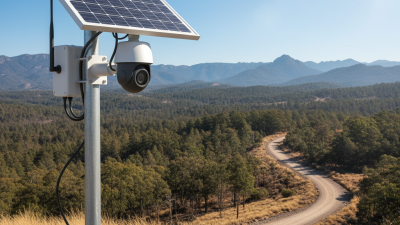
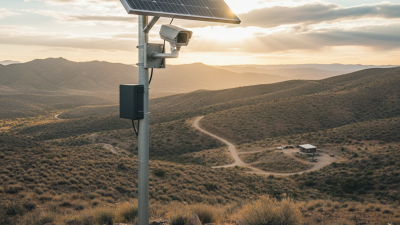
Why Choose a Solar People Counting Camera for Your Business?
In today's competitive landscape, businesses need efficient ways to manage foot traffic. A Solar People Counting Camera offers a solution. Renowned industry expert Dr. Emily Carter has stated, "Understanding customer movement is key to optimizing space and resources." This emphasizes the importance of technology in modern business strategy.
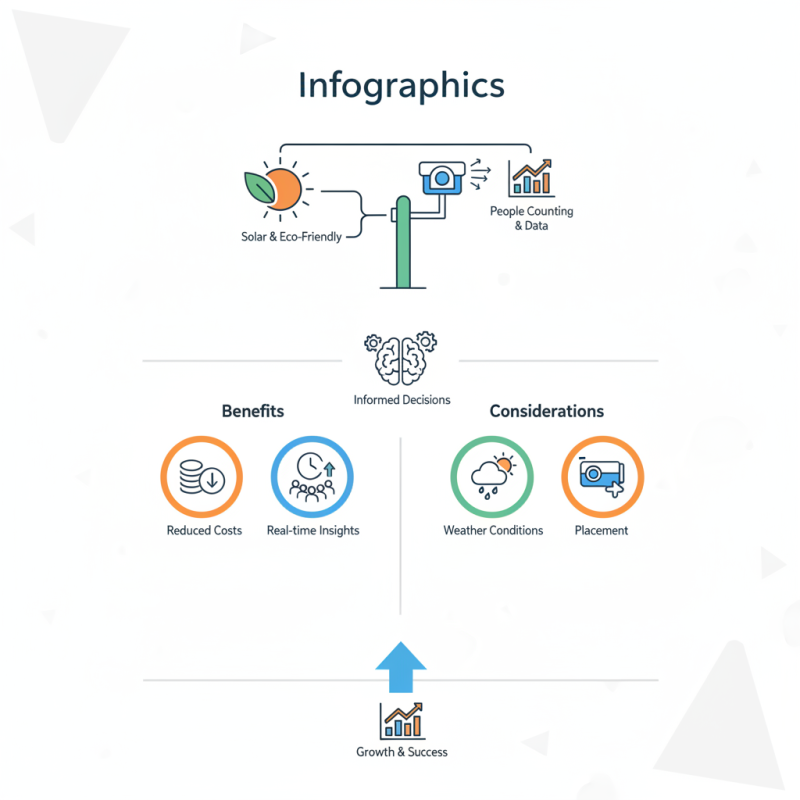
Solar People Counting Cameras are not only eco-friendly but also highly effective. They utilize solar energy to power advanced counting algorithms, reducing operational costs. These cameras provide real-time data, allowing businesses to adjust strategies quickly. They help in understanding peak hours, enabling better staffing and inventory decisions. However, the technology is not infallible. Factors like weather conditions and camera placement can affect accuracy.
Choosing a Solar People Counting Camera means investing in both sustainability and efficiency. However, businesses should carefully assess their specific needs and limitations. The ultimate goal is to make informed decisions based on reliable data. This is where the reliability of these cameras comes into play, providing insights that are crucial for growth and success.
Benefits of Using Solar People Counting Cameras in Business Operations
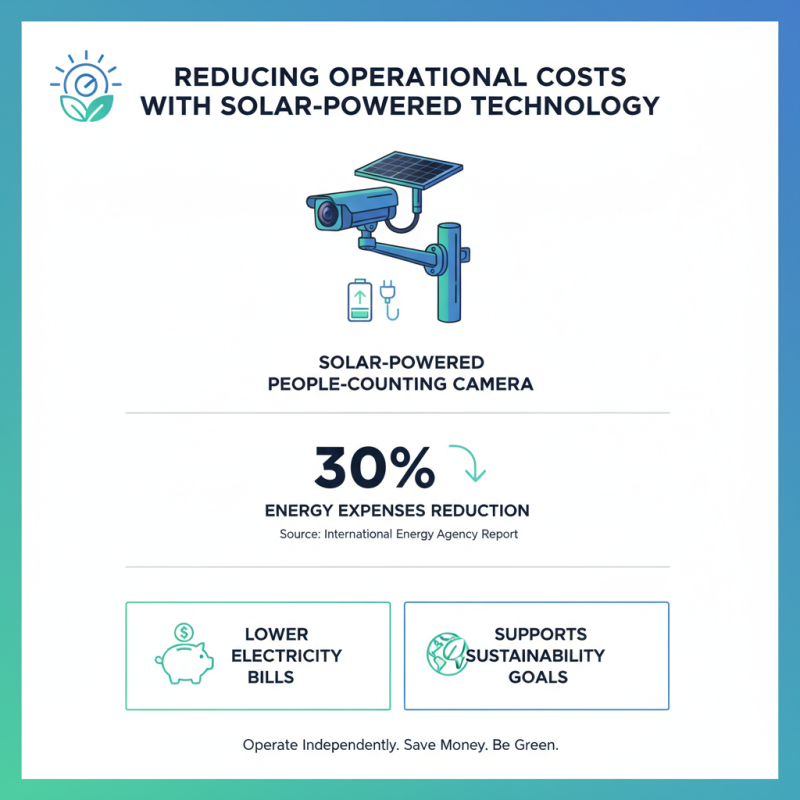
In today's competitive landscape, businesses are increasingly turning to solar people counting cameras. These devices provide key insights into foot traffic, allowing companies to make informed decisions. According to a study by the International Energy Agency, solar technology can reduce energy costs by up to 50%. This efficiency is crucial for businesses seeking sustainability.
Utilizing solar-powered cameras eliminates the need for electrical installations, reducing both setup time and ongoing energy expenses. They operate effectively in various locations, making them versatile for retail and public spaces. A report from MarketsandMarkets indicates that the global people counting system market is expected to reach $1.2 billion by 2025, driven by the demand for smart analytics.
Tip: When choosing a camera, consider its adaptability to various lighting conditions. Look for models with night vision capabilities. Remember that accurate data collection can guide marketing strategies and enhance customer experience.
Another consideration is data reliability. Not all cameras provide consistent results. A study by the European Commission highlights that misleading data can lead to poor decision-making. Investing in reliable technology can prevent costly mistakes.
Tip: Regularly analyze data trends. Assessing changes in foot traffic patterns can inform staffing and inventory decisions. Staying proactive in analyzing this data is essential for optimizing operations.
Why Choose a Solar People Counting Camera for Your Business? - Benefits of Using Solar People Counting Cameras in Business Operations
| Benefit |
Description |
Impact on Operations |
| Energy Efficiency |
Utilizes solar power, reducing energy costs and environmental impact. |
Lower operational costs and enhanced sustainability. |
| Real-Time Data |
Provides real-time foot traffic data to inform business decisions. |
Improved customer engagement and optimized staffing. |
| Cost-Effective |
Eliminates the need for extensive wiring and infrastructure. |
Reduced installation costs and easier setup. |
| Scalability |
Allows for easy expansion to multiple locations without complex dependencies. |
Flexible growth as business needs evolve. |
| Durability |
Built to withstand various weather conditions for reliable outdoor use. |
Consistent performance regardless of environment. |
How Solar People Counting Cameras Enhance Data Accuracy and Insights
Solar people counting cameras offer exceptional benefits for businesses aiming to enhance their data accuracy and insights. These cameras harness solar power, making them environmentally friendly and cost-effective. They gather precise foot traffic data, crucial for understanding customer behavior. Reliable analytics can help determine peak hours and optimize staffing.
With advanced technology, these cameras record real-time data. Businesses can analyze trends over various periods. The insights gained can inform marketing strategies and improve customer experience. However, proper calibration is necessary. Inaccurate setup may lead to misleading data.
Moreover, these systems can struggle in extreme weather conditions or inadequate lighting. Regular maintenance is essential to ensure optimal performance. Companies should invest time in monitoring the data to avoid relying solely on automation. Each metric should be understood in context to drive meaningful decisions.
Environmental Impact of Solar People Counting Solutions
The environmental impact of solar people counting solutions is profound. These technologies use solar energy, reducing reliance on traditional power sources. By harnessing sunlight, businesses can decrease their carbon footprint. This aligns with global efforts to combat climate change.
Implementing solar-powered cameras also promotes sustainability in operations. Businesses become more eco-friendly by minimizing energy consumption. Solar cameras work efficiently with little maintenance. However, challenges exist. The initial investment can be high for some. Not all locations receive ample sunlight year-round, impacting performance.
Despite these downsides, the long-term benefits often outweigh immediate concerns. Using solar technology fosters innovative practices within communities. It encourages a shift towards sustainable choices, influencing other businesses to follow suit. This type of technology not only counts people but also counts toward a greener future.
Integrating Solar People Counting Cameras with Existing Business Systems
Integrating solar people counting cameras with existing business systems can significantly enhance operational efficiency. These cameras are equipped with advanced sensors that count foot traffic and analyze patterns. By collecting data on customer movement, businesses can make informed decisions. This integration turns raw data into actionable insights.
The installation process can pose challenges. Ensuring compatibility with current software is critical. Businesses may need to update their systems to accommodate new technology. It’s essential to collaborate with IT teams to streamline this process. Unexpected technical issues may arise, and having a responsive support system is beneficial.
Beyond technicalities, interpreting the data is an art. Understanding customer behavior requires time and focus. Relying solely on data without contextual analysis may lead to misinterpretation. Continuous learning about the data can improve business strategies. Adjusting approaches based on real-time feedback is a dynamic but necessary part of the integration journey.
Monthly Customer Foot Traffic Before and After Installing Solar People Counting Cameras
This bar chart illustrates the foot traffic trends for a business over a year, comparing the number of customers before and after the installation of solar people counting cameras. The data shows a significant increase in customer visits post-installation, highlighting the potential positive impact of using advanced technology for tracking and analyzing foot traffic in a business setting.